The Transformative Power of AI in Education
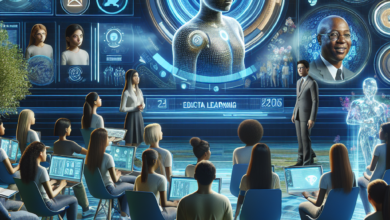
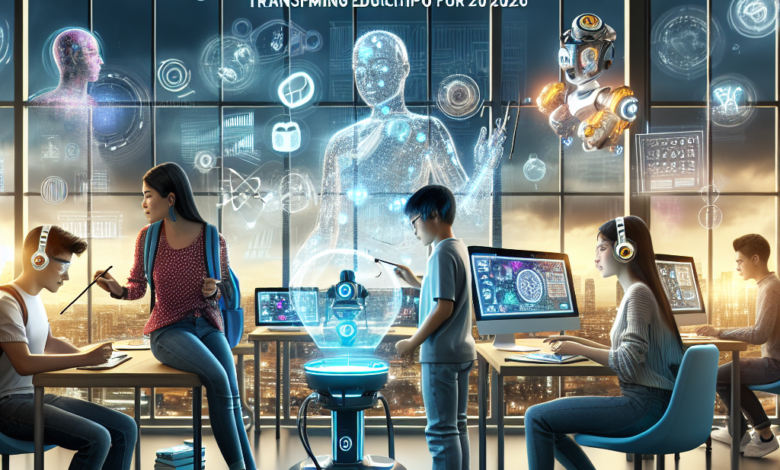
As we enter 2026, the landscape of education is witnessing remarkable transformations driven by artificial intelligence. From personalized learning experiences tailored to individual student needs to fully immersive virtual classrooms, AI is redefining how students learn and educators teach.
AI-Powered Tutoring Tools
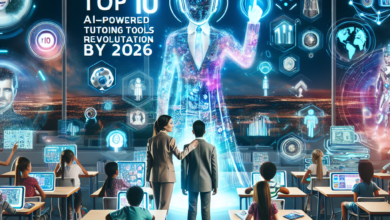
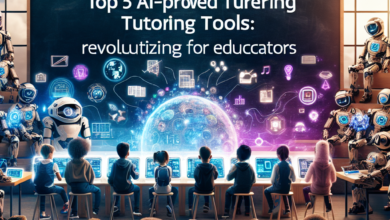
One of the most significant advancements in education has been the rise of AI tutoring systems. These tools provide tailored support to enhance student learning outcomes. Some of the most impactful AI tutoring tools include:
- ChatGPT Educational Assistants: AI that can answer questions and provide explanations on-demand.
- Intelligent Tutoring Systems (ITS): Adaptively changing difficulty based on real-time analysis of student performance.
- StudyBuddy: An AI tool that generates personalized study plans and materials.
These tools not only support students but also lighten the workload for educators, allowing them to focus on more in-depth teaching methods.
Personalized Learning Experiences
The need for personalized learning AI has grown tremendously, especially in diverse classrooms where students have varied learning styles. AI technologies analyze students’ progress and behaviors to create customized learning paths. Some benefits of personalized learning powered by AI include:
- Adaptive Learning: Adjusting content difficulty based on individual performance.
- Real-time Feedback: Offering instant feedback to reinforce learning.
- Engagement: Increasing student engagement through interactive learning experiences.
For a deeper dive into how AI can transform personalized learning, check out our article on AI in Education.
Virtual Classrooms with AI
As remote education becomes more prevalent, virtual classrooms with AI are becoming an essential tool for educators. They integrate various features such as:
- Real-time Translation: Breaking language barriers for multicultural classrooms.
- Automated Attendance: Using facial recognition and AI algorithms to manage classroom attendance.
- Engagement Analytics: Tracking student participation and engagement levels to inform teaching strategies.
These enhancements create an interactive learning environment that optimizes student learning.
Conclusion: The Future is Now
As technology continues to evolve, the integration of AI in education is not just a trend but a necessity. Educators are encouraged to explore the myriad of AI tools available to enhance the learning experience. How have you leveraged AI in your teaching? Share your thoughts in the comments, and for more insights, check out our related article on Personalized Learning with AI.