AI in Healthcare 2026: Top Predictions for Diagnostics and Medical Imaging Innovations
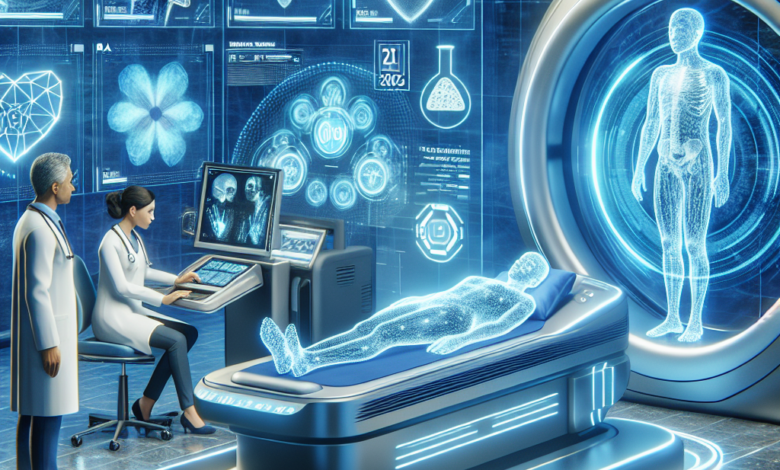
As we move into 2026, artificial intelligence (AI) is not just a tech trend; it has become a fundamental aspect of healthcare transformation. From enhancing patient care to streamlining medical processes, AI-driven tools are setting new standards in the industry. Join us as we explore how AI is reshaping the healthcare landscape.
AI for Diagnostics
Accurate and timely diagnostics are crucial for effective treatment. AI for diagnostics in 2026 is enabling healthcare professionals to detect diseases with unprecedented accuracy.
Top AI Diagnostic Tools
- DeepLearn: Utilizes deep learning algorithms for disease prediction.
- MedAI: Offers real-time diagnostic assistance during patient evaluations.
- Predictive Analytics Platforms: Analyze patient data to foresee potential health issues.
These tools are not only improving accuracy but also expediting the diagnosis process, significantly impacting patient outcomes. For more on AI diagnostics, check our article on AI in Diagnostics.
AI-Powered Medical Imaging
Medical imaging has undergone a revolutionary shift thanks to AI. In 2026, AI-powered medical imaging tools are enhancing clarity and diagnostic precision, making it easier to identify anomalies and diseases.

Leading AI Imaging Tools
- ImageNet: An advanced tool that provides automated imaging analysis.
- Radiology AI: Detects fractures and tumors faster than traditional methods.
- 3D Imaging Solutions: Creates detailed 3D models for pre-surgery planning.
These advancements are critical for rapid and precise medical assessments. To delve deeper into this topic, explore our article on AI in Medical Imaging.
Healthcare Automation
Automating healthcare processes has become a game-changer, allowing medical professionals to reallocate their time to more critical tasks. In 2026, AI-driven automation tools are streamlining workflows, from scheduling appointments to managing patient records.
Essential Automation Tools
- AI Scheduling Assistants: Efficiently schedule patient appointments and follow-ups.
- Patient Engagement Platforms: Automate patient communication and feedback collection.
- Electronic Health Record (EHR) Management: Automatically organize and update patient data.
By reducing administrative burdens, these tools improve patient care and enhance the overall healthcare experience.