Transforming Patient Care with AI
In 2026, artificial intelligence (AI) is a cornerstone of healthcare innovation. From enhancing diagnostics to streamlining medical processes, AI tools are redefining patient care. With advanced algorithms and machine learning, these technologies are helping healthcare professionals make informed decisions faster and with more accuracy than ever before.
AI for Diagnostics
AI in diagnostics has proven to be a game-changer. Innovative algorithms are being deployed to analyze patient data, leading to quicker and more precise diagnoses. Below are some of the leading AI tools transforming diagnostics in 2026:
- IBM Watson Health: Utilizing vast databases to provide insights for oncology and genomics.
- Google AI: Focusing on predictive analytics for early disease detection.
- PathAI: Leveraging machine learning for pathology to provide accurate reports.
For more on AI-driven diagnostics, check out our article on AI in Healthcare.
AI-Powered Medical Imaging
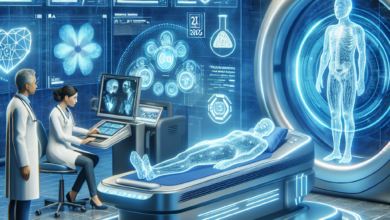
Medical imaging is another area where AI is making significant strides. AI algorithms can analyze imaging data faster and more accurately than traditional methods. Here are some notable AI-powered medical imaging tools:
- Qure.ai: Uses deep learning to interpret radiology scans.
- Zebra Medical Vision: Provides AI-driven analysis for various radiological conditions.
- Aidoc: Streamlines workflow and improves diagnosis times for emergency imaging.
For an in-depth analysis of AI-powered medical imaging, refer to our detailed article on AI in Medical Imaging.
Healthcare Automation through AI
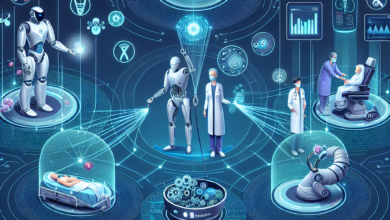
The future of healthcare is not just in diagnostics and imaging; automation powered by AI is reshaping patient management and administrative processes. Here are some key AI tools driving automation in healthcare:
- Chatbots: Providing patient support and triage services.
- RPA Tools: Automating repetitive tasks for administrative efficiency.
- EHR AI Integration: Enhancing electronic health records by automating documentation and data analysis.